
Do you need a permit for a porta potty in Tracy?
If the unit sits on your own driveway, yard, or a construction lot behind the property line, you generally will not need a separate permit just for the toilet itself. Tracy Porta Pros delivers to job sites across the city and most sit fully on private ground with no issue. Problems start when space runs out and a unit has to go curbside, on a sidewalk, or in a parking lane. That is public right of way, and placement there needs confirming with the city before delivery, not after. This is the same logic that applies to a dumpster permit or a permit for dumpster on street placement: private ground is simple, public ground triggers a review. If your project already needs a temporary fence rental around the perimeter, that fencing question and the toilet placement question often get asked to the same city office at the same time, so it is worth confirming both together rather than one at a time.
Where can you actually place a unit on site?
Placement rules are less about paperwork and more about physical access and code. A standard unit runs about 44 by 48 inches on the ground and stands roughly 92 inches tall, so it needs a stable, level pad clear of overhead lines. If you are renting an ADA accessible porta potty, ADA Standards section 304.3.1 calls for a 60 inch turning circle in front of the unit, and section 403.5.1 sets a 36 inch clear route to reach it. Section 213.2 requires that where several single-user units are clustered, at least 5 percent, and never fewer than one, be accessible. For construction crews, OSHA 1926.51(c) sets toilet counts by headcount, which is the starting point for our how many porta potties do I need guide. A roll-off dumpster needs about 60 feet of straight clearance behind the truck for delivery, which matters just as much as any permit question when you are laying out a tight Tracy lot alongside a roll-off dumpster rental or a construction dumpster rental.
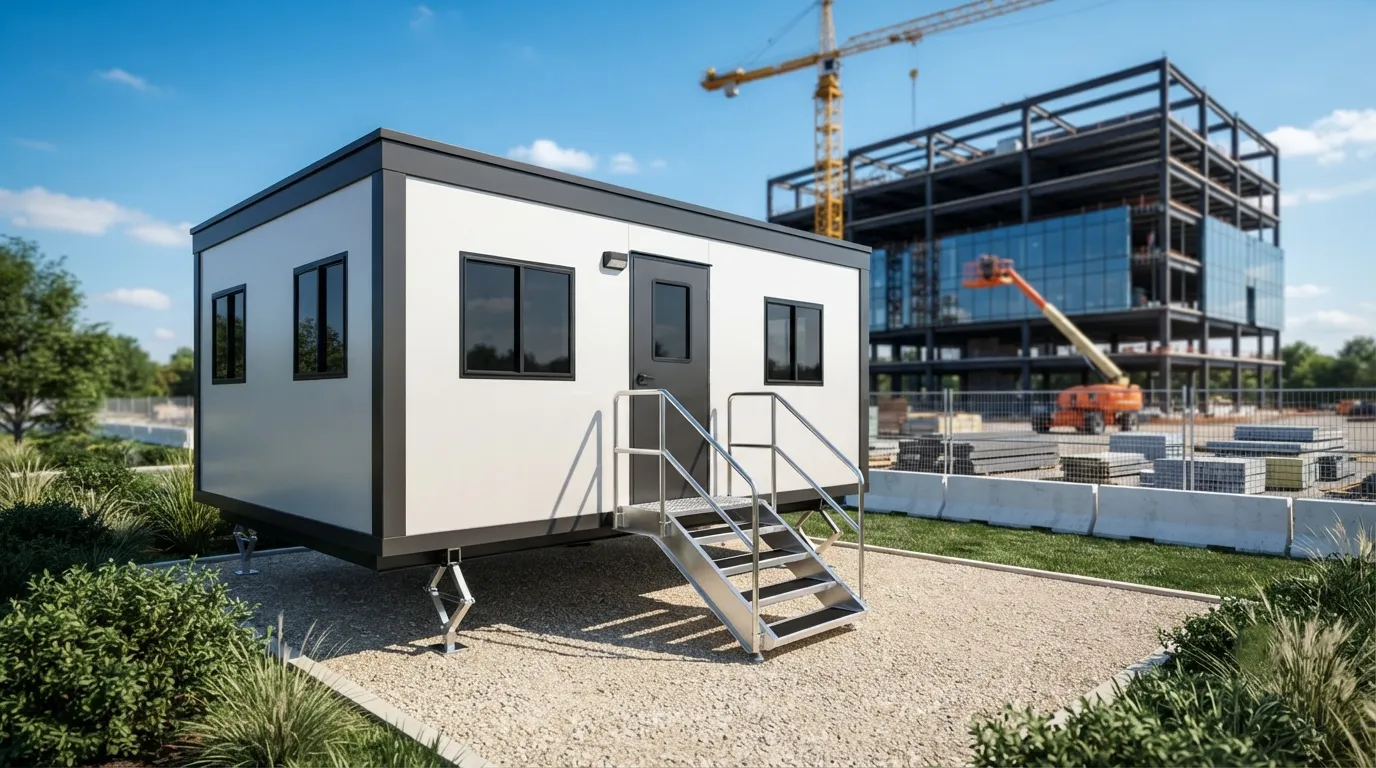
What about dumpsters, storage containers, and fencing on the street?
Right of way rules do not stop at toilets. A dumpster sitting in a driveway is usually fine; one sitting in a traffic lane or blocking a sidewalk is a different conversation with the city, the same way a jersey city dumpster permit or a delaware porta potty rental placement would be handled by their own local authority. Tracy has its own process, and it needs to be confirmed directly rather than assumed from another city's rule. The same goes for a storage container rental parked on a public street, a chain link temporary fence that encroaches past the property line, or a temporary power pole permit tied to a construction meter. None of these are DIY guesses. Check our dumpster permit requirements page and our porta potty placement guide before you commit to a layout, and if you are unsure where your project falls, request a quote and we will walk the site plan with you.
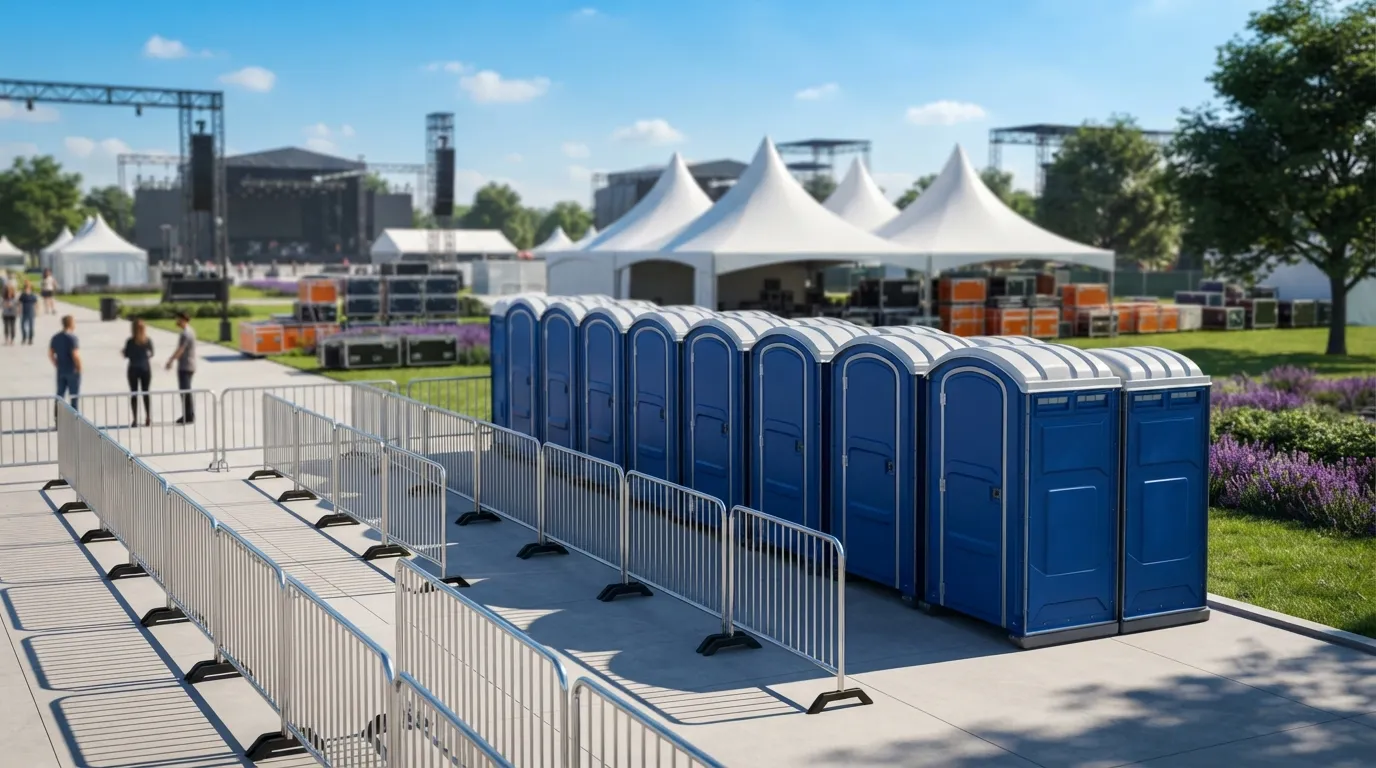
Are there rules for restrooms at events and job sites?
Yes, and they come from two different directions: OSHA for job sites, and general placement common sense for events. OSHA 1926.51(a)(1) requires an adequate supply of potable water at all places of employment, and 1926.51(c) sets the toilet ratio: one facility for 20 workers or fewer, scaling up from there. Field labor crews fall under a related standard, 1928.110, which calls for facilities within a quarter mile walk. If your crew is applying paints, coatings, herbicides or insecticides, 1926.51(f)(1) requires washing facilities for that specific work, and 29 CFR 1910.141(d)(2) requires soap and towels or a hand dryer at any handwashing station, not just sanitizer. That is why a handwashing station rental or portable sink rental often rides along with a toilet order rather than getting added later. For weddings, festivals, and fairs, there is no OSHA count to hit, but see our event restroom rental and wedding restroom rental pages for realistic guest-to-unit ratios, or look at festival restroom rental if you are planning something larger, like a county fair layout.
| service | typical day rate | typical week rate |
|---|---|---|
| standard unit | $150 | $200 |
| ADA unit | $230 | $240 |
| dumpster | $75 | $600 |
For a fuller breakdown by duration, see porta potty rental cost, porta potty rental per day, or monthly porta potty rental if the project runs long. Crews near Mountain House, 7.8 miles northwest of Tracy, and Lathrop, 13.8 miles northeast, order under the same right-of-way logic described here, since county and city lines shift the answer.
Do I need a permit for a porta potty on my own property?
Usually not. A unit placed fully within your property line, away from the street and sidewalk, typically does not require a separate city permit. Confirm with Tracy directly if your lot borders a public easement, since easement boundaries are not always obvious from a fence line.
Can I place a porta potty on the street in Tracy?
Only with confirmation from the city first. Street and sidewalk placement counts as public right of way, and that review has to happen before delivery. Tracy Porta Pros can hold delivery until you have that answer so you are not stuck moving a full unit later.
Does a dumpster need a permit if it stays in my driveway?
Generally no, if it sits entirely on private property. It is the same rule that applies to porta potties: private ground is simple, public street or curb placement is not, and that needs checking with the city case by case.
What OSHA rule sets toilet counts for a job site?
OSHA 1926.51(c) sets the ratio: one toilet for 20 workers or fewer, then one toilet and one urinal per 40 workers up to 200. See our OSHA portable toilet requirements page for the full breakdown by crew size.
Do accessible units have different placement rules?
Yes. ADA Standards section 304.3.1 requires a 60 inch turning circle and section 403.5.1 requires a 36 inch clear path to the unit. Our ADA restroom requirements page covers how that changes pad placement on a tight site.
Next step
Get a delivery date
Tell us the address, the dates and the headcount. We size the order and confirm the route.